In the kitchen
A morning in the life of the maple hash
One plate, six years, three cooks and about forty thousand orders. The story of the dish that will not come off the menu.
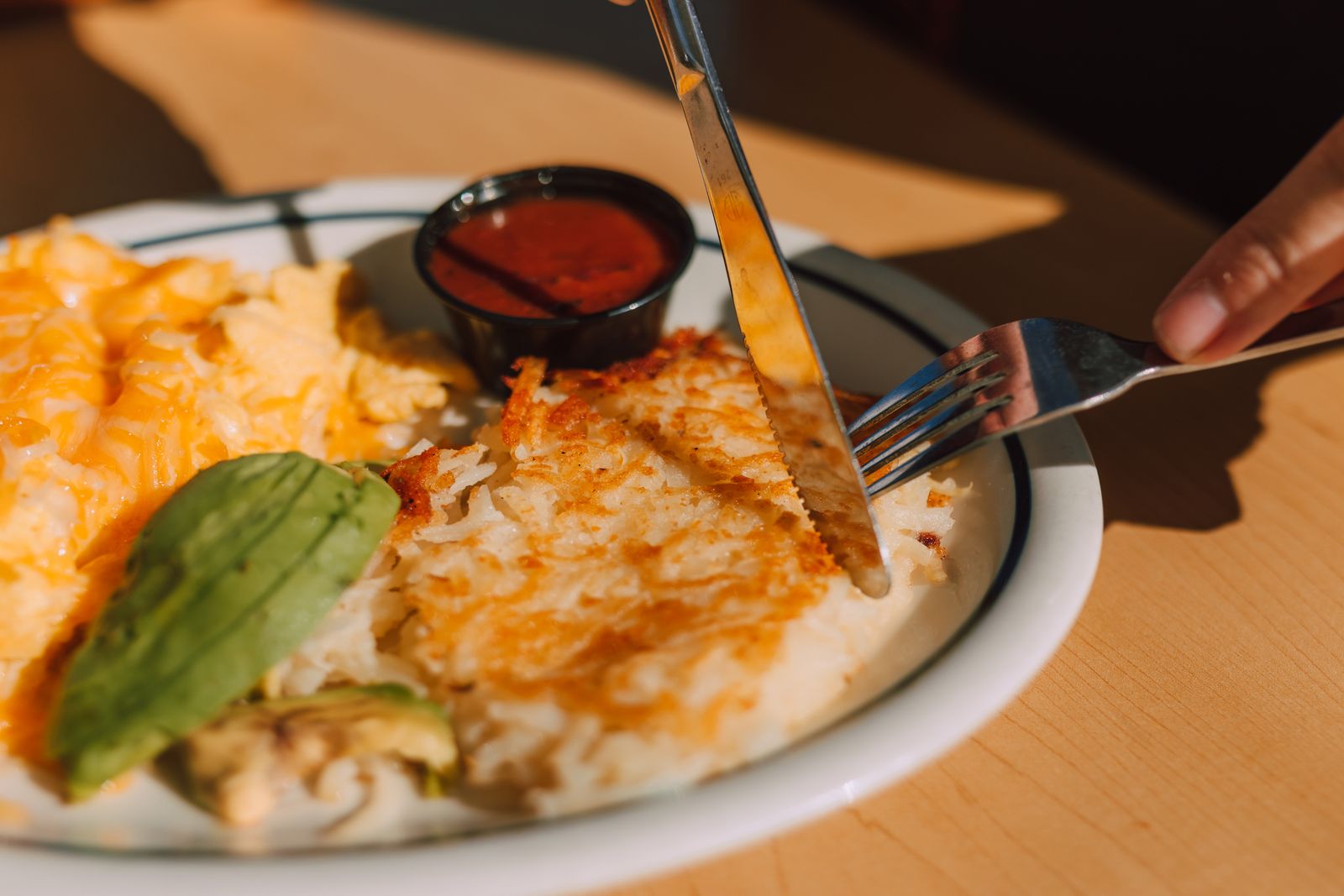
The maple hash went on the menu in the winter of 2019 as a special. It was supposed to run for a month. It is now roughly a fifth of everything that leaves the Church Street kitchen before eleven in the morning, and the two times we have tried to rotate it off, people have genuinely been upset with us at the counter.
It is not a complicated dish. That is exactly why it works.
It starts the afternoon before
Potatoes are cut at about two in the afternoon for the next morning. Three quarter inch dice, skin on, from a farm in Grand Isle most of the year. They get par-cooked in salted water until a knife goes in with a little resistance, then spread on sheet trays and cooled uncovered in the walk-in overnight.
That overnight dry-out is the whole trick. A potato that goes onto the flat top wet steams instead of browning, and you get a soft grey hash that nobody orders twice. A potato that has sat uncovered in cold dry air for sixteen hours has a slightly leathery surface that crisps in four minutes.
The onion is sweated, not fried
Sweet onion goes in a low pan with a little butter at 6:15 every morning and cooks slowly for about forty minutes until it is soft, translucent and sweet, with no colour on it at all. It then sits in a hotel pan next to the griddle for service.
Colour on the onion would fight the maple. We want the sweetness to come from two places, the onion and the syrup, and for them to taste like the same idea.
Then it is four minutes
When a ticket prints, a portion of potato hits the flat top in clarified butter and is left alone. Not stirred. The most common mistake a new cook makes on this dish is moving it, which knocks off the crust that is trying to form.
After about two and a half minutes it gets one turn, then the onion goes in, then a handful of smoked cheddar, then the maple, which goes on last and off the heat because it will burn. Two eggs come off the adjacent burner at the same time. Total time from ticket to pass is a little under five minutes, and the eggs are the limiting factor, not the hash.
The syrup is a real decision
We buy dark amber syrup by the drum from a sugarbush in Huntington every March. Dark amber, formerly called grade B, has a deeper and slightly mineral flavour that stands up to smoked cheddar. Golden syrup is lovely on a pancake and completely disappears in this dish.
A drum costs more than we would like to admit and lasts about seven months. When people ask what makes the hash taste the way it does, it is mostly that, plus the overnight potatoes.
Why it will not change
Three cooks have made this dish for more than five years. They plate it the same way: hash at the centre, eggs leaning on it, a wedge of sourdough at four o'clock, black pepper over the whole thing. The consistency is the product.
A regular named Nell has ordered it every other Tuesday for six years. If we changed the ratio of onion to potato, she would notice within one bite, and she would be right to say something. That is the standard. It is a fifteen dollar breakfast plate, and it is the same fifteen dollar breakfast plate every single time.
Sample editorial content written for a demo website. The café, people and figures in this piece are not real.