Behind the bench
Why a croissant takes three days
Twenty-seven layers, a butter block, and two nights in a cold room. Here is the whole schedule, hour by hour, and why we will not shorten it.
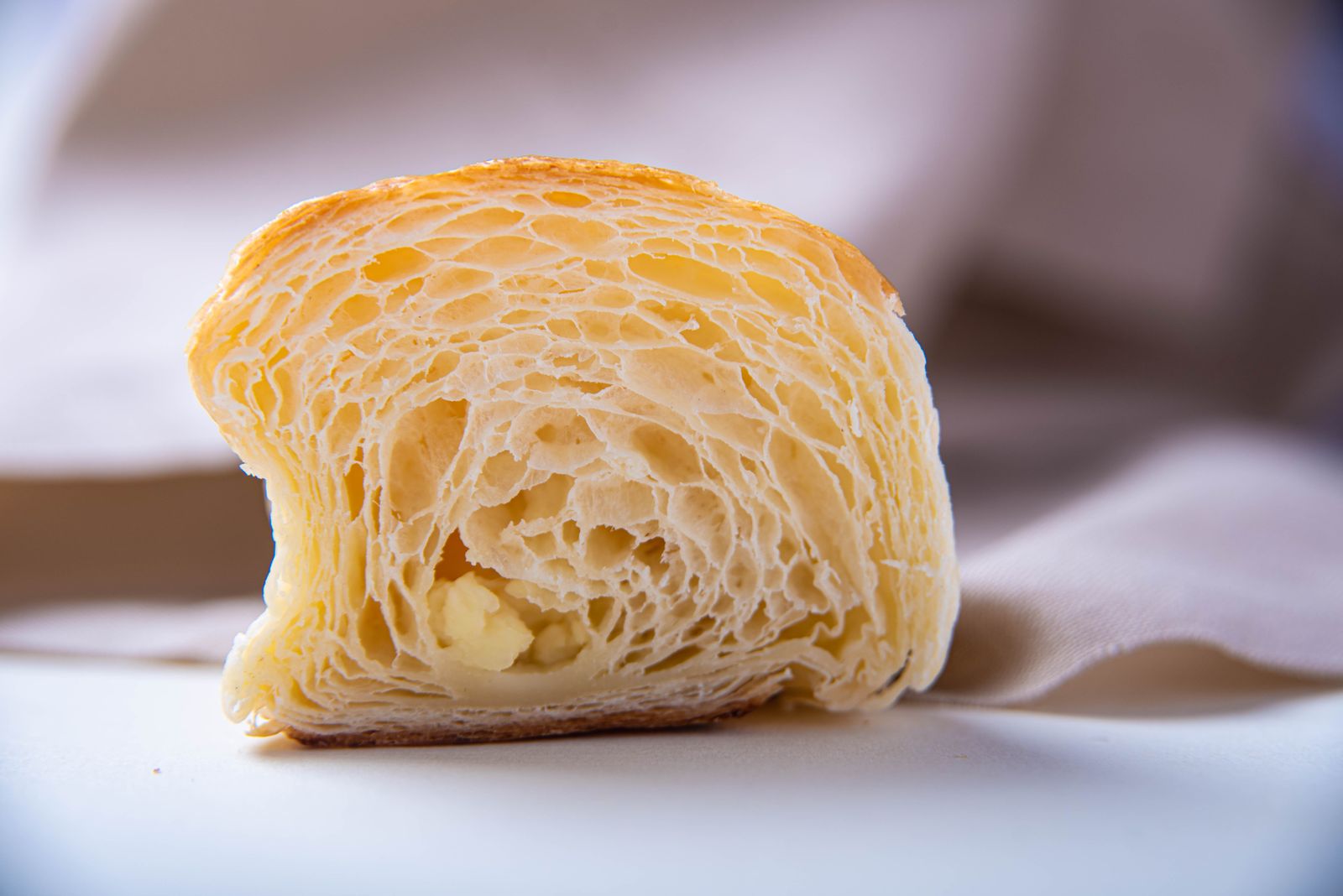
People ask why a croissant costs four dollars and fifty cents. The honest answer is that it takes three days, a pound of European butter for every nine pastries, and a baker standing at a bench at 4:40 in the morning. None of that is a marketing decision. It is what the dough requires.
Here is the actual schedule we run at Church Street, which supplies the case at all three cafés.
Day one: the détrempe
The first day is boring, which is how you know it is working. Flour, water, milk, a little sugar, salt and yeast get mixed into a shaggy dough called a détrempe. It is mixed short, on purpose. Too much gluten development now and the dough fights back during folding tomorrow.
The détrempe rests in the walk-in overnight at about 38°F. In that time the flour hydrates fully, the yeast works slowly, and a flavour develops that you simply cannot get from a two hour ferment. A dough rushed at this stage tastes like bread-flavoured air. You can feel the difference in your hands the next morning: a rested détrempe is silky and extensible, a rushed one snaps back at you.
Day two: lamination
Day two is the day everyone imagines when they think of croissants. A butter block, pounded flat and kept at exactly the same plasticity as the dough, gets locked inside the détrempe. Then the folding begins.
We do three letter folds with a rest in the cold between each one. Three folds gives twenty-seven layers of butter separated by twenty-seven layers of dough. Every one of those layers is going to release steam in the oven and push the layer above it up. That is the entire mechanism of a croissant: not a leavening agent, just water turning into steam between sheets of butter.
The hardest part is temperature. If the butter gets warm it melts into the dough and you get brioche. If it gets too cold it shatters and you get pockets. The bench at Pine Street sits at 66°F in winter and we still put the dough back in the cold every twenty minutes.
Day three: shaping and the overnight proof
The laminated block is sheeted down, cut into triangles, and rolled. Rolling is a feel thing. Too tight and the layers cannot expand, too loose and the croissant slumps. Ingrid rolls about four hundred an hour and could probably do it in the dark.
Shaped croissants go onto trays and into the retarder overnight at 38°F. They proof slowly for ten to twelve hours. A slow cold proof is the difference between a honeycomb interior and a bready one. This is also the step most bakeries skip, because a proofer at 80°F does the same job in ninety minutes and nobody has to come in early.
4:40 am: the bake
The deck oven comes up to 400°F. Trays go in with steam for the first four minutes, which keeps the crust soft long enough for the layers to expand before it sets. Then the steam is vented and the pastry browns hard for another twelve minutes.
You can hear a good croissant. When it comes out and cools on the rack the crust crackles audibly as it contracts. If the bake was short, it is silent, and it will be chewy by nine o'clock.
The first tray is on the counter before the door opens at 6:30. On a Saturday we bake again at 10:15, because a case that is empty at eleven is a case that told everyone to go somewhere else.
What we will not do
Every one of those would save money and let us open the bench at 7 am instead of 4:40. We are not doing any of them, and the reason is entirely selfish: we would stop being proud of the thing in the case.
If you want to watch, the first Saturday of every month Rosalind runs a sourdough and lamination clinic at Church Street at 3 pm. It is free, eight people at a time, and you go home with a piece of our starter.
- Buy frozen laminated dough, which arrives ready to bake and is what most cafés in the country use
- Use a dough improver or a shortening blend in place of butter to make the schedule forgiving
- Warm-proof in ninety minutes to skip the overnight retard
- Bake pale so the pastry looks bigger and lasts longer on the shelf
Sample editorial content written for a demo website. The café, people and figures in this piece are not real.