Coffee
How we buy coffee, and why it comes from a hundred yards away
One roaster, two coffees, an eighteen day rule and a grinder that gets dialled three times a day. What actually makes a café cup taste good.
Our Pine Street café is a hundred yards from Brio Coffeeworks in Burlington's South End. That is not a coincidence and it is not a marketing line. When you can walk to your roaster, you can taste a roast on Monday, say it is a little flat, and have a different one on Tuesday. Almost nobody in this business gets that.
People assume buying coffee for a café is about finding the most interesting bean. It mostly is not. It is about finding a coffee that tastes good four hundred times a day, made by six different people, on a bar that is under pressure between 7:30 and 9:00 in the morning.
The house blend has not changed in four years
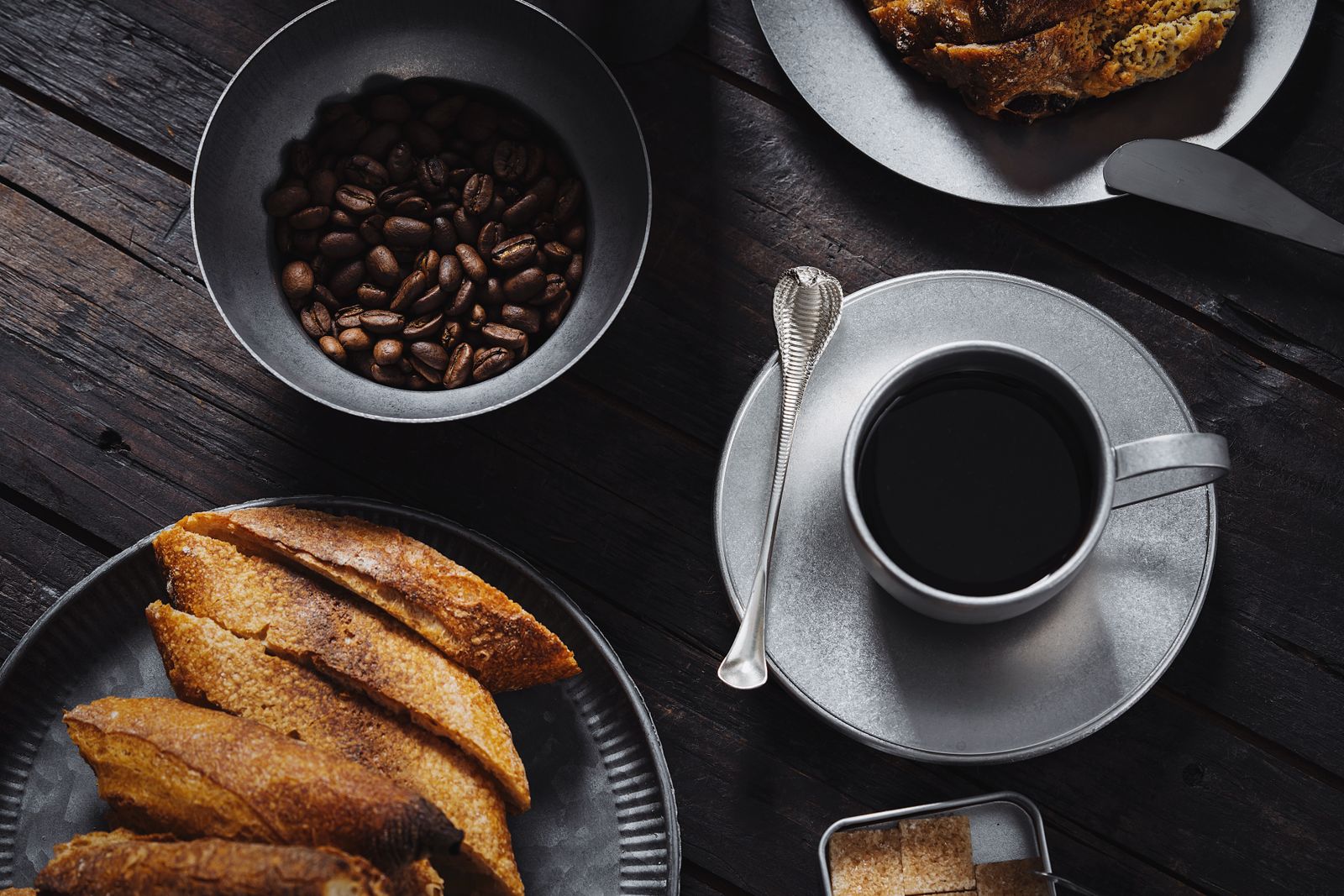
Our house blend is a washed Colombian and a natural Ethiopian. The Colombian gives body and a caramel sweetness that holds up in milk. The Ethiopian gives it a berry lift so that a straight espresso is not boring. Together they are forgiving: if a shot runs two seconds long it is still perfectly drinkable.
That forgiveness is the entire point. A single origin that is glorious in a twenty-eight second window and sour at twenty-six is a wonderful coffee and a terrible café coffee. We keep those on the second grinder as a rotating pour over, where a barista is paying attention to one cup instead of six.
The eighteen day rule
Beans arrive on Tuesday, roasted the Monday before. We rest them a day, because coffee straight off the roaster is full of carbon dioxide and pulls gassy and uneven. From day two to about day eighteen it is at its best. After that the aromatics fade, and by four weeks you are drinking something brown and flat.
So we do not buy in bulk to save money. We buy weekly, in quantities we will use, and anything that crosses eighteen days off roast goes home with the staff rather than into a cup we sell. In practice this happens maybe twice a year, because the volume works out.
Dialled three times a day
Grind setting is not something you set in January and leave. Humidity changes it. Bean age changes it. A cold morning where the hopper sits near the door changes it. So the bar pulls a test shot at open, again at ten, and again after the lunch rush, and adjusts.
The target is a double shot of about 40 grams of liquid out of 19 grams of coffee in roughly 28 seconds. If it runs fast the shot is thin and sour, and we grind finer. If it chokes, it is bitter and dry, and we go coarser. It takes about ninety seconds to check and it is the single highest-leverage thing anyone on the bar does all day.
Milk is not an afterthought
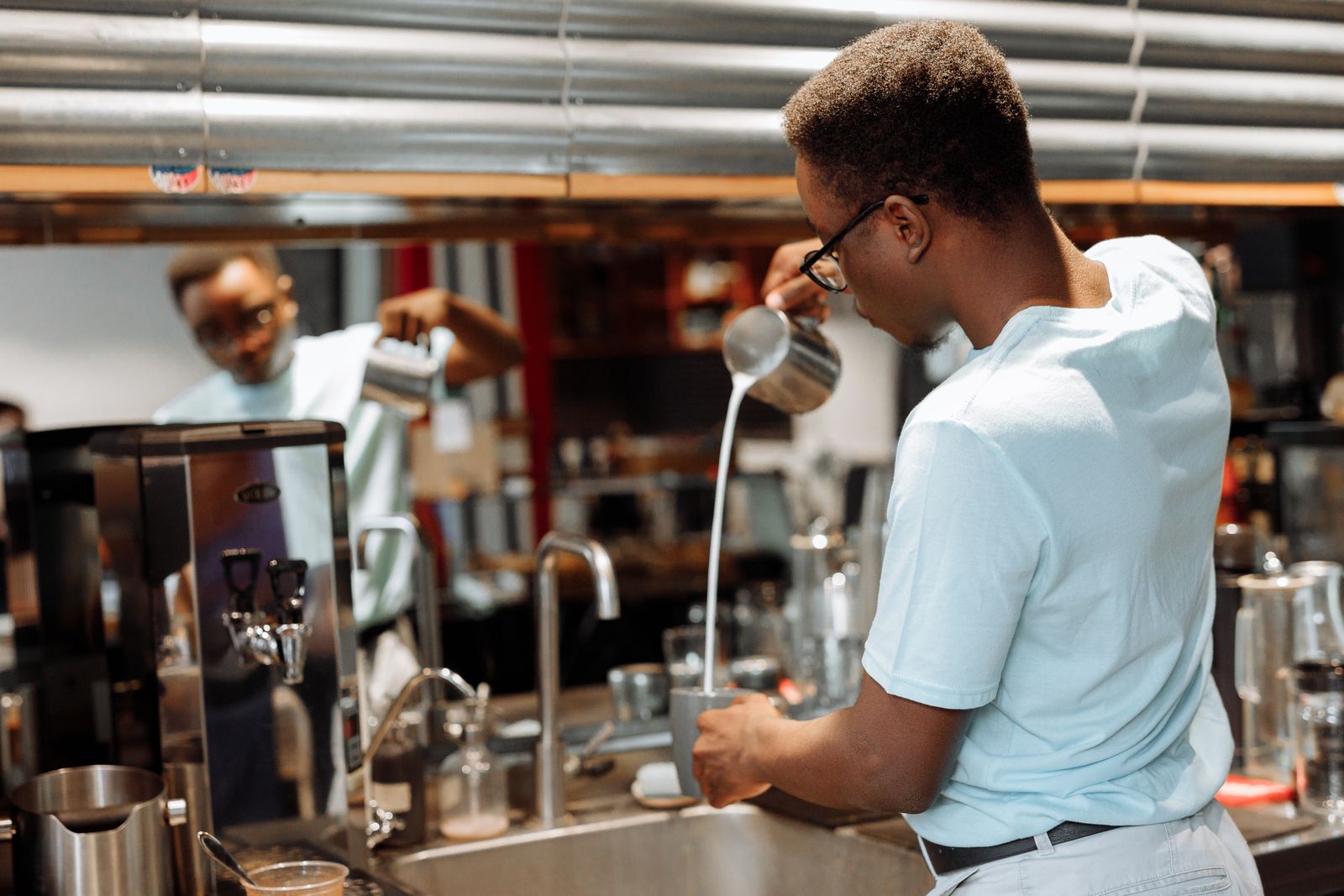
Every drink gets its own pitcher, steamed for that cup. There is no jug of warm milk sitting on the bar. Steamed milk that has been sitting for four minutes has lost its texture and started to taste cooked, and you can absolutely tell in a cortado.
Oat, almond and whole milk are all the same price. This should not be remarkable in 2026, but a surprising number of places still charge seventy-five cents for a substitution that costs them roughly nothing. Oat steams slightly differently, a little less forgiving on the stretch, and our training covers all three.
What you can do at home
We sell twelve ounce retail bags of both the house blend and the rotating single origin at all three cafés, and we will grind them for your brewer if you tell us what you have. Bring your own cup in and any drink is fifty cents less.
- Buy whole bean and grind it right before you brew, even with a cheap burr grinder
- Use a scale: 60 grams of coffee per litre of water is a good place to start for drip
- Keep your water just off the boil, around 200°F, not straight from a rolling boil
- Buy less, more often, and finish a bag within about three weeks of the roast date
Sample editorial content written for a demo website. The café, people and figures in this piece are not real.